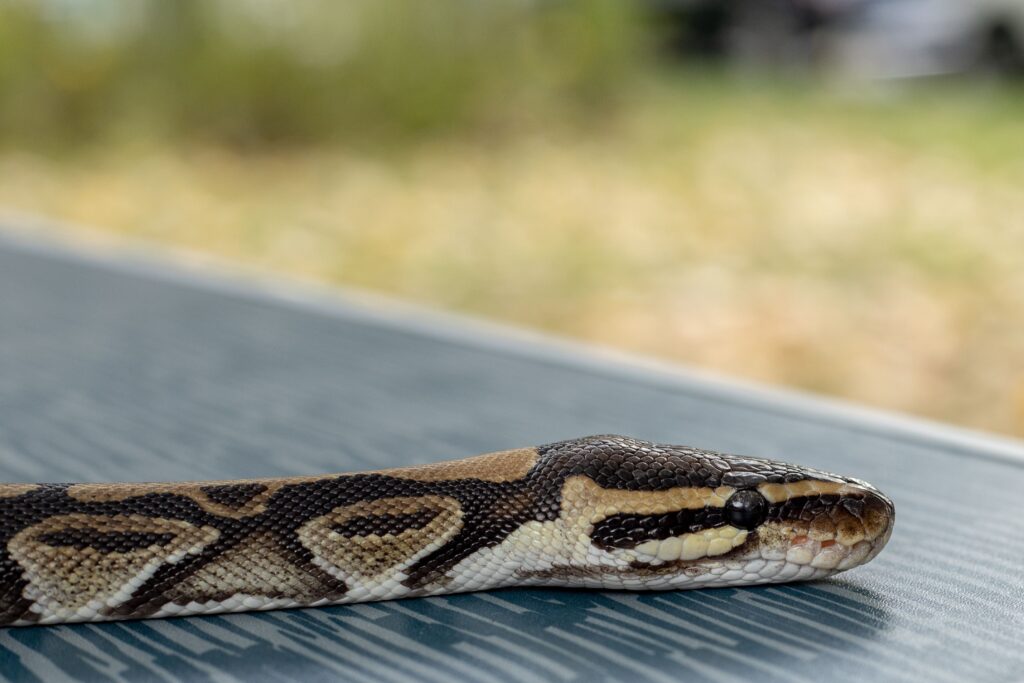
Ball pythons are calm, hardy, and easy to love, which is why so many people pick one as a first pet snake. They do not need a huge setup, and they do not ask for much day to day. They do need steady heat, the right humidity, fresh water, and a quiet place to hide. Get those basics right and your snake will settle in fast.
This guide walks you through how to care for a ball python, step by step, in plain terms. You can use it before you bring a snake home, or to check the setup you already have.
What a Ball Python Needs Every Day
A ball python needs a warm side and a cool side in its tank, clean water, and two hides. One hide goes on the warm side and one goes on the cool side. That way your snake can pick the spot that feels best without giving up a safe hiding place.
Check the water each morning and top it up or change it if it looks dirty. Spot clean any mess as soon as you see it. A quick daily check takes less than five minutes, and it keeps small problems from turning into big ones.
Temperature and Humidity at a Glance
Heat matters more than almost anything else for a ball python. If the tank is too cold, your snake may stop eating and have trouble digesting food. If it is too hot, it can overheat fast. Use a thermostat with your heat source, and check the temps with a digital thermometer, not just by feel.
| Spot in the Tank | Temperature | Humidity | What to Use |
|---|---|---|---|
| Warm side | 88 to 92 F | 50 to 60 percent | Heat mat or heat lamp on a thermostat |
| Cool side | 75 to 80 F | 50 to 60 percent | No extra heat, just room air in the tank |
| Night time | 75 to 80 F | 50 to 60 percent | Lower heat, no bright light |
| When shedding | 88 to 92 F warm side | 60 to 70 percent | Mist lightly and add a damp hide |
Keep the heat on one side only. A snake that can move between warm and cool spots can control its own body temperature, just like it would in the wild.
Setting Up the Tank
A young ball python does well in a 20 gallon tank, and an adult needs at least a 40 gallon tank. A bigger tank is fine if it has plenty of hides and cover, so your snake does not feel exposed. Use a secure lid with clips. Ball pythons are strong and curious, and they will test every gap.
- Substrate: coconut fiber, cypress mulch, or paper towels for a new snake
- Two hides, one warm and one cool, just big enough for the snake to curl up inside
- A sturdy water bowl that will not tip over
- A branch or fake plant for cover, if you have room
- A thermostat, a digital thermometer, and a hygrometer
For a full setup checklist, read our guide How to Set Up a Snake Tank. It covers tank size, heating, and the gear to buy first.
Feeding Your Ball Python
Feed a prey item about as wide as the widest part of your snake. For most pet ball pythons, that means a frozen thawed mouse or rat, warmed to room temperature. Young snakes usually eat every 5 to 7 days, and adults eat every 10 to 14 days. Offer food in the evening, when your snake is more active.
Do not handle your snake for 48 hours after a meal. It needs quiet time to digest. If your ball python skips a meal, do not panic right away. Healthy adults often fast for a few weeks, often in winter or during breeding season. Check your temps and humidity first, then try again in a few days.
Handling and Shedding
Let a new ball python settle in for a week before you handle it much. After that, short, calm sessions a few times a week work well. Pick your snake up with two hands, support its body, and move slowly. Wash your hands before and after handling.
A ball python sheds every 4 to 6 weeks. Its skin will look dull and its eyes may turn blue for a few days, then clear up just before the shed. Raise the humidity a little during this time. A healthy shed comes off in one piece. If bits stick, a short soak in lukewarm water can help, but do not pull the skin off.
Quick Tips for New Keepers
- Use a thermostat every time. It is the one piece of gear you should never skip.
- Weigh your snake once a month, so you can spot slow weight loss early.
- Keep the tank in a quiet room, away from loud speakers and direct sun.
- Clean the water bowl and spot clean the tank each week, and do a full clean once a month.
- Watch for signs of trouble, like wheezing, stuck shed, or refusing food for more than two months.
Once your snake is settled, picking a name is the fun part. Browse Ball Python Names for ideas, and if you want help choosing, read How to Name a Snake. You can also start from our full list at Snake Names.
FAQs
How often should I feed a ball python?
Young ball pythons usually eat every 5 to 7 days, and adults eat every 10 to 14 days. Offer a prey item about as wide as your snake at its widest point.
Why is my ball python not eating?
Check the temperature and humidity first, since cool tanks are a common cause. Stress, shedding, and winter fasting can also cause a skipped meal. If your snake keeps refusing food for more than two months or loses weight, talk to a reptile vet.
What temperature should a ball python tank be?
Aim for 88 to 92 F on the warm side and 75 to 80 F on the cool side. Use a thermostat and a digital thermometer to keep those numbers steady.
How long do ball pythons live?
With good care, a pet ball python often lives 20 to 30 years. That long life is worth thinking about before you buy one, since it is a real long term commitment.
Are ball pythons good for beginners?
Yes, they are one of the best first snakes. They are calm, they stay a manageable size, and their care is simple once the tank is set up right.