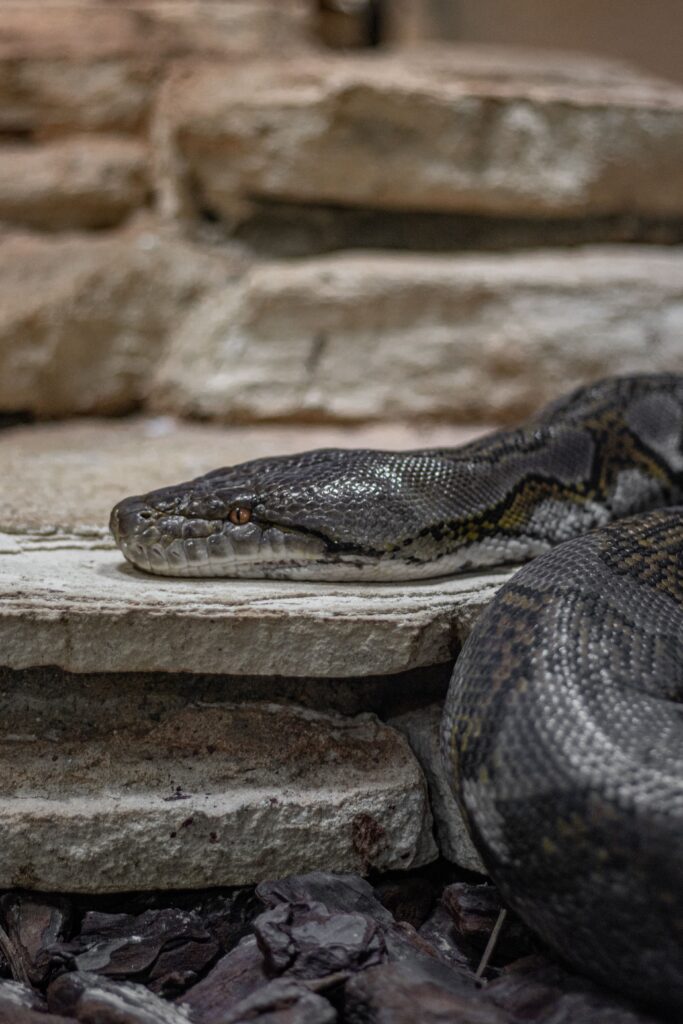
A good tank is the base of good snake care. If the setup is right, your snake will eat well, shed well, and feel safe. If it is wrong, you will see the problems fast, in skipped meals and stuck sheds. The good news is that setting up a snake tank is simple, once you know what to buy and where to put it.
This guide shows you how to set up a snake tank, step by step, with the gear list, the heating setup, and the checks to do before your snake moves in.
What You Need to Set Up a Snake Tank
| Item | What to Look For | Why It Matters | Tips |
|---|---|---|---|
| Tank | Secure lid with clips | Stops escapes | Size up for adults |
| Heat source | Heat mat or lamp | Keeps your snake warm | Always use a thermostat |
| Hides | Two, one warm and one cool | Helps your snake feel safe | Just big enough to curl in |
| Water bowl | Heavy and sturdy | Fresh water every day | Big enough to soak in |
You will also need substrate, a digital thermometer, and a hygrometer. Those last two are not extras. You cannot guess temperature and humidity by feel, and your snake will pay for a wrong guess.
Pick the Right Tank Size
A young ball python or corn snake does well in a 20 gallon tank, and an adult needs at least a 40 gallon tank. A bigger tank is fine if it has plenty of hides and cover, so your snake does not feel exposed. A tank that is too big and too empty can stress a young snake, so add extra hides and plants if you go large early.
Glass tanks are common and easy to find. Plastic tubs work well too, and they hold humidity better. Pick the one that fits your space and budget, and make sure the lid locks tight. Snakes are strong and curious, and they will test every gap.
Set Up Heating and Humidity
Put your heat source on one side of the tank only. That gives your snake a warm side and a cool side, so it can move to the temperature it wants. For a ball python, aim for 88 to 92 F on the warm side and 75 to 80 F on the cool side. For a corn snake, aim for 82 to 86 F on the warm side and 70 to 75 F on the cool side.
Use a thermostat with every heat source. It turns the heat off when the tank gets too warm, and it is the one piece of gear you should never skip. Put the thermometer probe on the warm side, at snake level, not up high on the wall. Aim for 50 to 60 percent humidity for a ball python, and 40 to 50 percent for a corn snake, with a little more when shedding.
How to Set Up a Snake Tank Step by Step
- Clean the tank and all the gear with warm water, and let it dry.
- Add substrate, about 2 to 3 inches deep, across the floor.
- Put a hide on the warm side and a hide on the cool side.
- Add the water bowl on the cool side, so it stays fresh longer.
- Set up the heat source on a thermostat, and check the temps for a full day.
- Add a branch or fake plant for cover, if you have room.
- Check the humidity, and adjust the lid or substrate if it is too low or too high.
Run the tank empty for 24 hours before your snake moves in. That gives you time to fix hot spots, low humidity, or a loose lid, without stressing your snake.
Quick Tips for a Healthy Tank
- Check the temps and water each morning.
- Spot clean messes as soon as you see them.
- Do a full clean once a month, and wash the water bowl weekly.
- Keep the tank in a quiet room, away from direct sun and loud speakers.
- Weigh your snake once a month, so you can spot problems early.
For care basics once the tank is ready, read How to Care for a Ball Python and How to Care for a Corn Snake. For feeding times, read How Often Do Snakes Eat. If you are still picking a name, browse Snake Names or read How to Name a Snake.
FAQs
What size tank does a ball python need?
A young ball python does well in a 20 gallon tank, and an adult needs at least a 40 gallon tank, with a secure lid and two hides.
What size tank does a corn snake need?
A young corn snake does well in a 10 to 20 gallon tank, and an adult needs at least a 40 gallon tank, with a secure lid and two hides.
Do I need a heat lamp or a heat mat?
Either can work, as long as it is on a thermostat. A heat mat warms the floor, and a lamp warms the air. Many keepers use a mat with a thermostat for ball pythons.
What is the best substrate for a snake tank?
Coconut fiber, cypress mulch, and aspen shavings all work well. Paper towels are a good choice for a new snake, since they make it easy to spot health issues.
How do I keep humidity up in a snake tank?
Use a substrate that holds moisture, add a large water bowl, and cover part of a screen lid if needed. Mist lightly during shedding, and check the hygrometer daily.